French Interpreting and Translation for Global Events
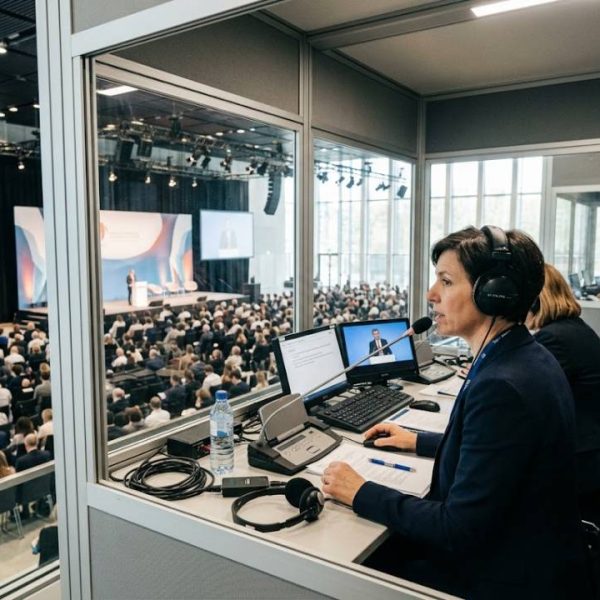
When a summit, trade fair or board meeting brings together French and English speakers, most organisers think first about the interpreters in the booth. That makes sense, because live speech is what everyone notices. Yet the event is only half the story. The invitations, the slide decks, the contracts signed afterwards and the press release that goes out the next morning all need the same care.
This article looks at how interpreting and written translation fit together, and why the best results come from planning both at once.
Two disciplines, one message
Interpreting deals with the spoken word in real time. Translation deals with written text, usually with time to research, revise and proofread. They draw on similar skills, but the working conditions could hardly be more different. A conference interpreter has a few seconds to turn a speaker's idea into natural French. A translator may spend an hour on one clause of a distribution agreement.
Professional interpreting services ensure that French-English events run smoothly from opening remarks to final Q&A. Experienced interpreters handle not just the language but the cultural nuances that keep international audiences engaged. Booking specialists early also guarantees they have time to master your industry's terminology.
The mistake many organisers make is hiring the two services separately, with no shared glossary. The interpreter calls a product one thing on stage, the brochure calls it another, and the French-speaking audience walks away confused.
Start with the documents
Good interpreting begins weeks before the event, with paperwork. Interpreters need the agenda, speaker bios, presentations and any technical vocabulary. If those materials only exist in English, it pays to commission english to french translation services for the core documents early. The interpreters then prepare from the same terminology the audience will read in their welcome packs.
This is also the moment to think about which variety of French you need. A delegation from Quebec will notice if every document uses terms that only sound natural in Lyon. Professional linguists can adapt tone and vocabulary for Canadian, Belgian, Swiss or African audiences.
Choosing the right interpreting mode
Not every meeting needs a booth. Here is a quick guide:
- Simultaneous interpreting suits conferences with large audiences and tight schedules.
- Consecutive interpreting works well for negotiations, press conferences and site visits.
- Whispered interpreting (chuchotage) helps one or two guests follow a meeting discreetly.
- Remote interpreting over a video platform is useful for hybrid events and short calls.
The choice affects your budget, your room layout and your technical setup. The general principles of language interpretation have not changed much in decades, but the equipment has become lighter and far more flexible.
Keep terminology consistent across teams
Large events rarely stop at one language pair. A European product launch might also need German and Russian. In that case, one coordinated supplier makes life easier. The same agency that handles your French can often provide german translation services for the Frankfurt partners and russian to english translation for feedback forms returned by delegates from Eastern Europe.
Behind the scenes, translators increasingly work inside a cat tool that stores approved terms and earlier translations. When the interpreters receive an extract of that glossary, the words spoken on stage finally match the words printed on the banner.
What happens after the event
The applause fades, but the work continues. Minutes need to be circulated, partnership agreements finalised and marketing content published in both languages. These texts often carry legal or commercial weight, so they should never be left to a quick machine draft.
A useful rule: anything that will be signed, published or archived deserves a human translator and a second reviewer. Speed matters, yet a mistranslated liability clause costs far more than an extra day of proofreading.
Budgeting without surprises
Interpreting is usually priced per interpreter per half day or full day, plus travel and equipment. Translation is typically priced per word, with discounts for repeated text. When you request quotes, share the full picture:
- Date, duration and format of the event
- Number of language pairs and expected audience size
- Volume of documents before and after the event
- Deadlines for each batch of text
With that information, a provider can suggest where to save. Recurring phrases in a series of brochures, for example, cost less when translation memory is used properly.
Briefing interpreters well
Even the most experienced interpreter benefits from a proper briefing. Arrange a short call a few days before the event. Walk through the programme, flag sensitive topics and explain any in-house acronyms. If speakers plan to read from scripts, send those scripts in advance, because fast reading is the hardest thing to interpret accurately.
On the day, give interpreters a clear view of the stage and screens, a working microphone and regular breaks. Simultaneous interpreters normally work in pairs and swap every twenty to thirty minutes to stay sharp.
A checklist for French-English events
- Confirm the variety of French your audience speaks.
- Translate core materials early and share them with interpreters.
- Build one glossary and use it everywhere.
- Pick the interpreting mode that fits each session.
- Plan follow-up translation for contracts, minutes and press material.
Final thoughts
French remains one of the most widely used languages in diplomacy, business and international organisations. Treating interpreting and translation as one joined-up service is the simplest way to make French-speaking guests feel expected rather than accommodated. When the spoken and written message match, your event sounds confident in both languages.