Simultaneous Interpretation Services for Multilingual Events
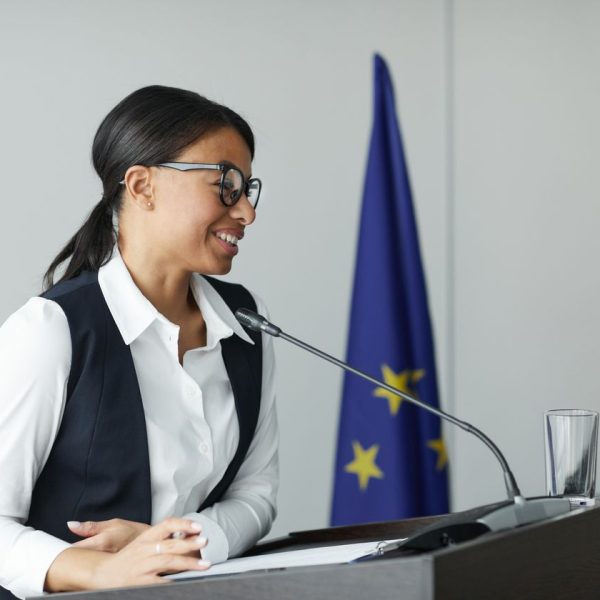
A keynote speaker finishes a joke in English and, half a second later, laughter ripples through the Spanish, German and Japanese sections of the hall. That delay is the whole trick. Simultaneous interpretation services make a room of several languages behave like a room of one, but only when the planning behind them is as careful as the speech itself.
Most event organisers see interpreting as a line item. It is closer to a production discipline, with its own staffing rules, technical standards and failure points. Here is what actually matters when you book it.
How Simultaneous Interpretation Services Work in Practice
In simultaneous mode, the interpreter listens through headphones in a soundproof booth and speaks the translation into a microphone while the speaker keeps talking. Delegates pick the language channel they want on a receiver. There is no pause in the programme, which is why this mode dominates conferences, shareholder meetings and international summits.
Reliable interpreting services form the backbone of any successful multilingual conference. Organisers who invest in qualified booth teams and proper audio equipment avoid the miscommunication that derails international events. Early booking also secures the best interpreters before peak conference season fills their calendars.
The technique became famous at the Nuremberg trials of 1945 and 1946, where interpreters worked live across English, French, Russian and German using wired headsets supplied by IBM. The basic setup has not changed as much as people think. A booth, a console, a clean audio feed and two skilled people remain the core.
Two people, not one. Simultaneous interpreting is mentally exhausting, and interpreters usually rotate every 20 to 30 minutes. A full day conference in one language pair therefore needs a team of at least two per booth. Organisers who try to save money with a single interpreter usually discover the cost in the final session, when accuracy drops sharply.
Choosing Between Onsite and Remote Interpreting
Since 2020, remote simultaneous interpreting has become a normal option. Interpreters work from professional hubs or home studios and deliver their channels through a cloud platform, while attendees listen on their phones. For hybrid events and webinars this is often the sensible choice, and it removes travel costs.
Onsite interpreting still wins for high stakes rooms. Negotiations, board meetings and events with poor internet are better served by interpreters who can see the speaker, read body language and react to a slide change without a lag. Many agencies now mix both, putting the main language pairs in physical booths and covering rarer languages remotely. A specialist provider of professional interpreting services can tell you quickly which blend fits your venue, audience and budget.
The deciding question is usually audio. If the venue cannot deliver a clean, direct feed from the speaker microphones to the interpreters, the quality of any interpretation will suffer, whether the booth is ten metres away or in another country.
Equipment Standards Nobody Should Skip
Booths are not just boxes. International standards set requirements for sound insulation, ventilation, lighting and visibility. ISO 2603 covers permanent booths and ISO 4043 covers mobile ones, and reputable technicians build to them because interpreters physically cannot perform well in a hot, noisy cabinet for eight hours.
Check the practical details before signing a contract. Interpreters need a direct line of sight to the stage or a reliable video feed, copies of every presentation in advance and a technician on site for the whole event. Receivers need charged batteries and a clear distribution plan. A 500 person conference can lose 20 minutes simply handing out headsets if nobody has thought about the queue.
Budget realistically. In most European markets, equipment hire and the technician can account for a large share of the total cost, sometimes as much as the interpreters themselves. Asking for a single quote that covers people, booths and sound avoids gaps where each supplier assumes the other is responsible.
Finding Qualified Conference Interpreters
Conference interpreting is a profession with clear quality markers. The International Association of Conference Interpreters (AIIC), founded in Paris in 1953, admits members only after peer sponsorship and a record of verified working days. Its directory is a useful starting point when you need interpreters for a rare language pair.
Look for interpreters who work into their native language, have experience in your subject area and are willing to join a briefing call before the event. Technical terminology is where most errors happen. A pharmaceutical congress, a mining investor day and a football federation assembly each have their own vocabulary, and a good team will ask for glossaries, speaker notes and previous reports.
The European Parliament is often cited as the extreme case. With 24 official languages, it handles 552 possible language combinations and relies on relay interpreting, where one booth works from another booth's output rather than from the original speech. Your event is unlikely to reach that scale, but the principle helps. If you have more than four or five languages, ask your provider how relay will be organised.
Getting the Most Value From Your Interpreters
Small steps make a big difference. Send slides at least 48 hours in advance. Ask speakers to avoid reading dense scripts at speed, since written language delivered quickly is the hardest thing to interpret. Tell the team about any video clips, because interpreters cannot translate audio they cannot hear through their consoles.
After the event, ask for feedback. Interpreters see things organisers miss, from a microphone that kept cutting out to a speaker whose accent needed more preparation time. That information makes the next conference cheaper and smoother.
Simultaneous interpretation is the quiet engine of international events. When it works, nobody notices it. Plan the booths, the audio and the team with the same care you give the stage, and your audience will hear every speaker as clearly as if they were talking in their own language.